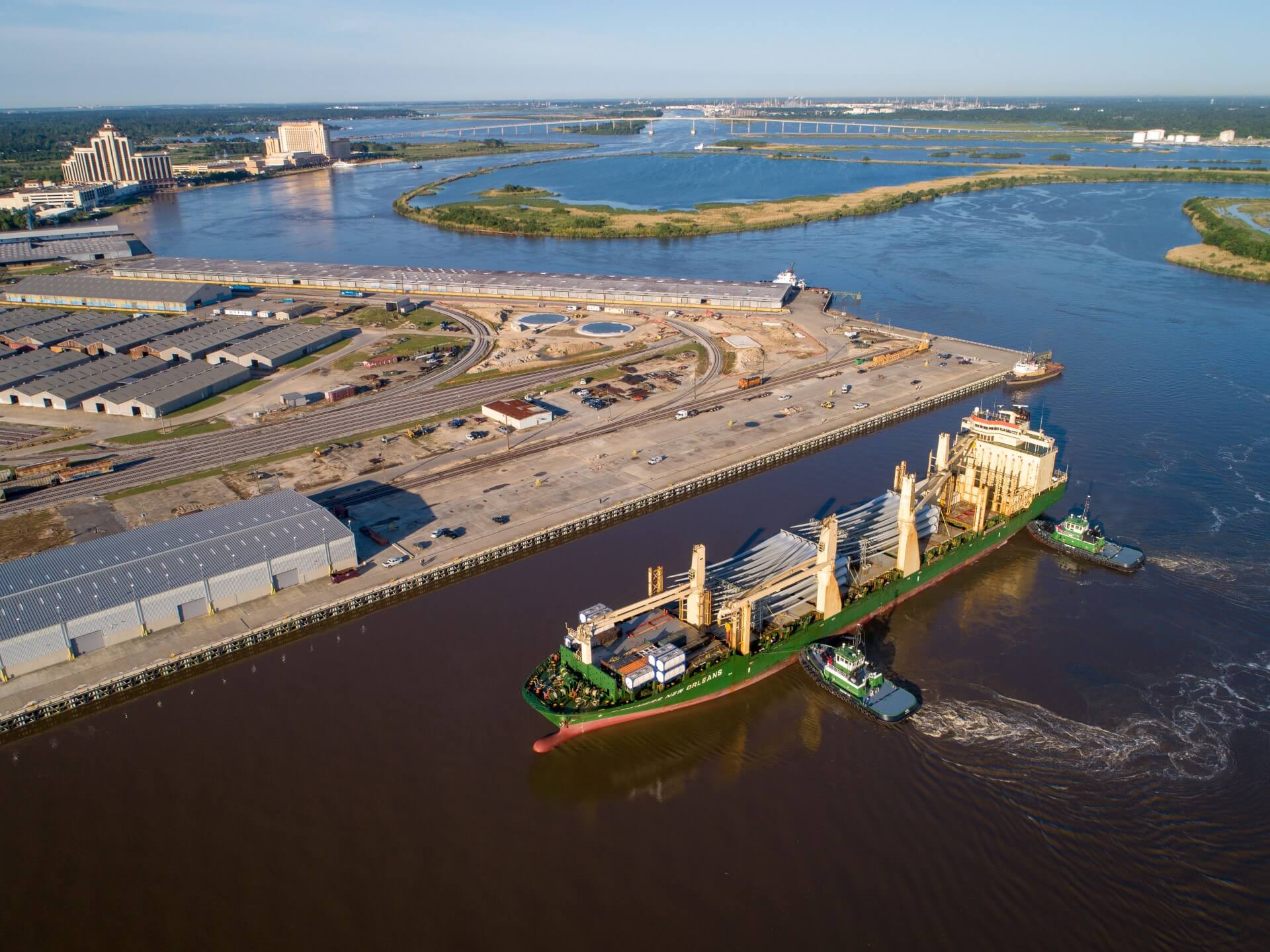
A major reconstruction project at the Port of Lake Charles is moving closer to the finish line.
Work on the City Docks Berths 4, 5 and 6 Wharf and Shed Reconstruction project continues across several final construction scopes. According to a recent update from Cajun Industries, the project remains on track for completion in 2026.
The progress marks an important step in the Port’s long-term investment in the infrastructure needed to move breakbulk, project and specialty cargo through Southwest Louisiana.
Recent Work Reaches Key Milestones
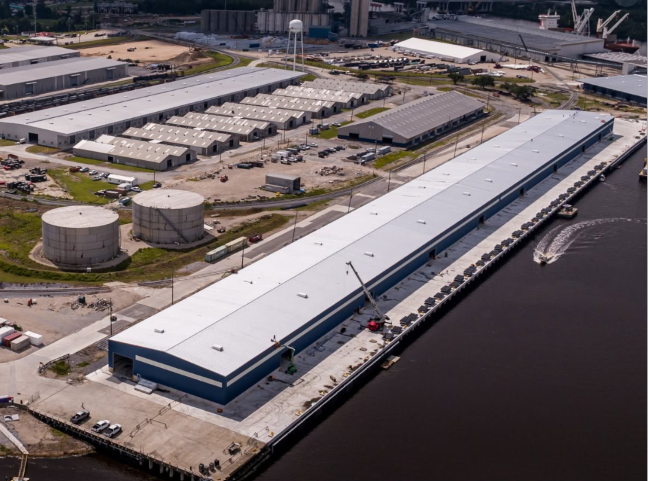
One of the project’s largest surface-level components is now complete. Cajun Industries reports that crews have finished the concrete paving scope surrounding the reconstructed facility.
Work continues inside the warehouse, including:
- Electrical installation
- Fire-suppression systems
- Painting
- Final interior finishes
Crews are also installing the berth fender system. This marine infrastructure helps absorb the force of vessels as they approach and dock, protecting both the berth and the ships using it.
Project Update: Concrete paving is complete, warehouse systems and finishes are advancing, and installation of the berth fender system is underway. The project remains on schedule for completion later this year.
Together, these milestones show that work is progressing beyond major structural construction and into the systems, finishes and operational components needed to bring the facility online.
Rebuilding Critical City Docks Infrastructure
The reconstruction covers Berths 4, 5 and 6 at the Port’s City Docks facility. The project includes the wharf structure and adjoining cargo storage infrastructure.
When the Port approved the construction agreement with Cajun Industries in June 2023, officials described the project as one of the largest construction efforts issued by the Lake Charles Harbor and Terminal District. At the time, the work was expected to take more than two and a half years because of its scale, including demolition, precast concrete piles and transit-shed construction.
The project is designed to replace aging infrastructure with a stronger, more modern facility equipped for current marine and cargo-handling demands.
Industry project information notes that strengthening the wharf and transit-shed infrastructure will allow the Port to accommodate larger cargo volumes and support Southwest Louisiana’s position in global trade.
What the Reconstruction Means for Cargo Movement
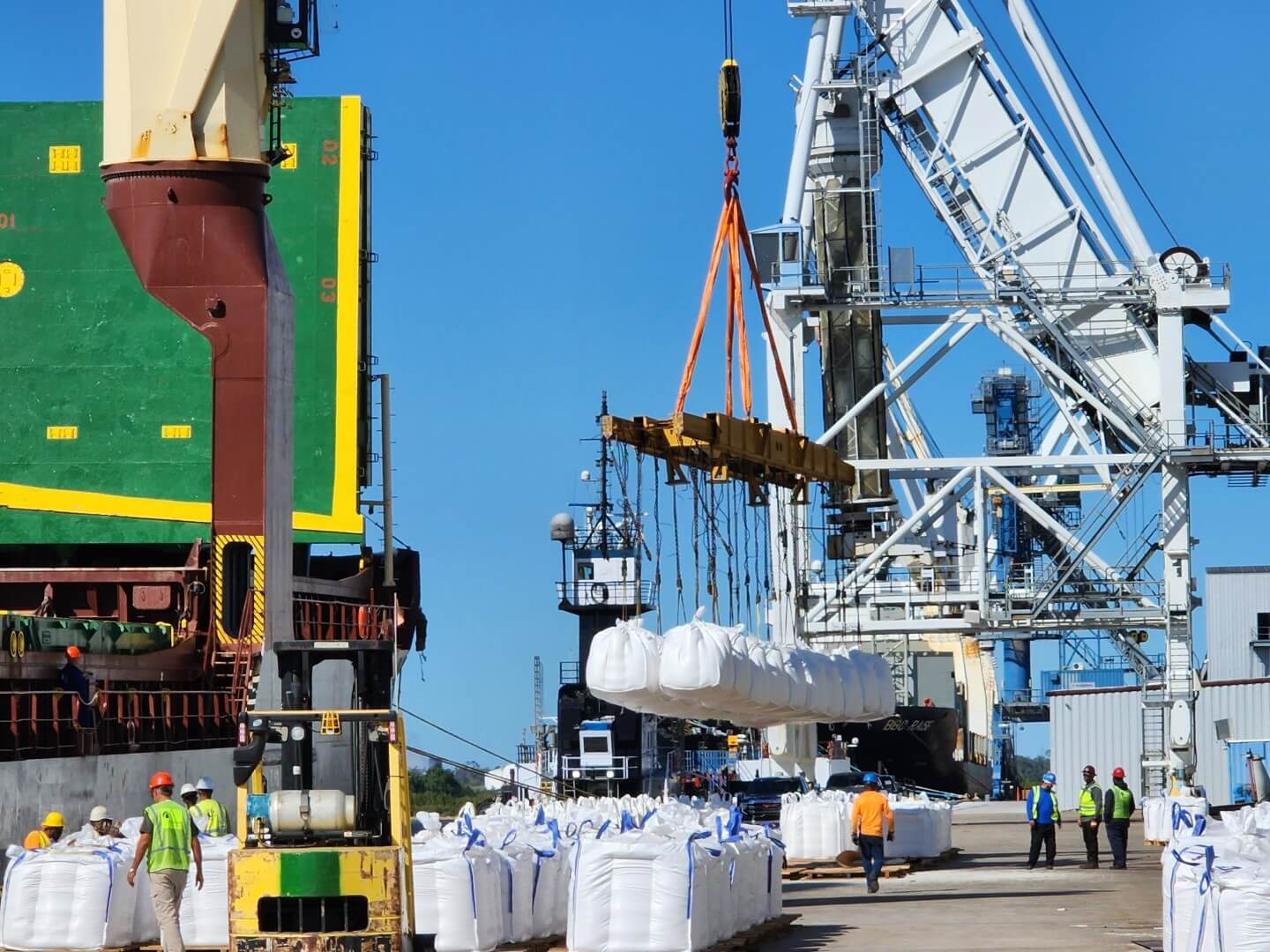
Wharf infrastructure directly affects what a port can handle and how efficiently cargo can move between vessels, storage areas and inland transportation connections.
A modernized facility provides a stronger platform for handling cargo such as:
- Breakbulk commodities
- Forest products
- Steel and industrial materials
- Heavy equipment
- Oversized project components
- Other specialty cargo requiring flexible handling and storage
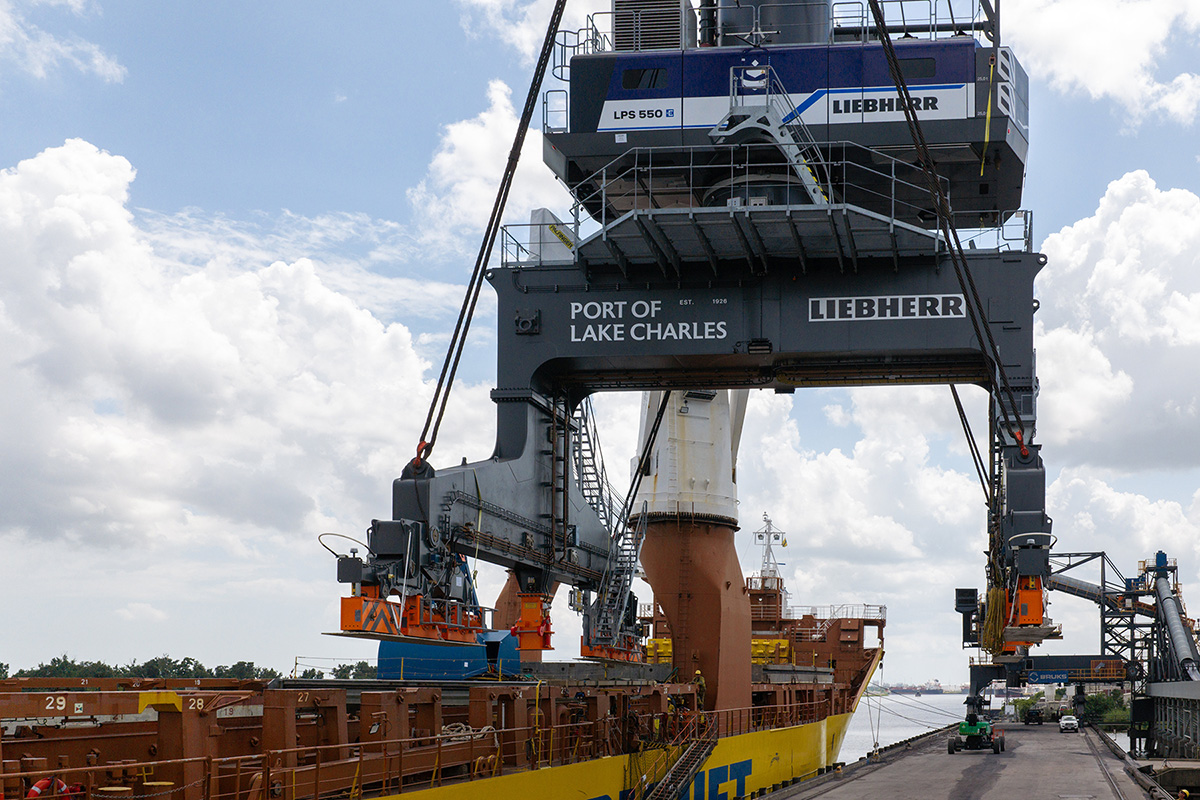
The warehouse adds covered space for cargo that must be protected from weather during staging, storage or transfer. Completed paving will also support movement around the facility as trucks, equipment and cargo move between the berth and surrounding terminal areas.
These elements work together. The wharf receives the vessel, the fender system supports safe berthing, the paved areas provide space for landside movement, and the warehouse offers additional storage and cargo-management capacity.
Building for the Port’s Next Chapter
The Port of Lake Charles serves cargo moving between Southwest Louisiana and markets around the world. Its location along the Calcasieu Ship Channel connects the City Docks to the Gulf of Mexico and supports breakbulk, heavy-lift, specialty, project and agricultural cargo operations.
Completing the Berths 4, 5 and 6 reconstruction will add another modernized asset to that transportation network.
For cargo owners and logistics partners, the value is not limited to a new wharf or warehouse. It is the combination of marine access, storage, cargo-handling space and connections that allow goods to continue moving after they reach the dock.
With concrete paving finished and several final systems now being installed, the reconstruction project is entering an important closing phase. Each completed scope moves the Port closer to putting the upgraded facility to work along Louisiana’s working waterfront.