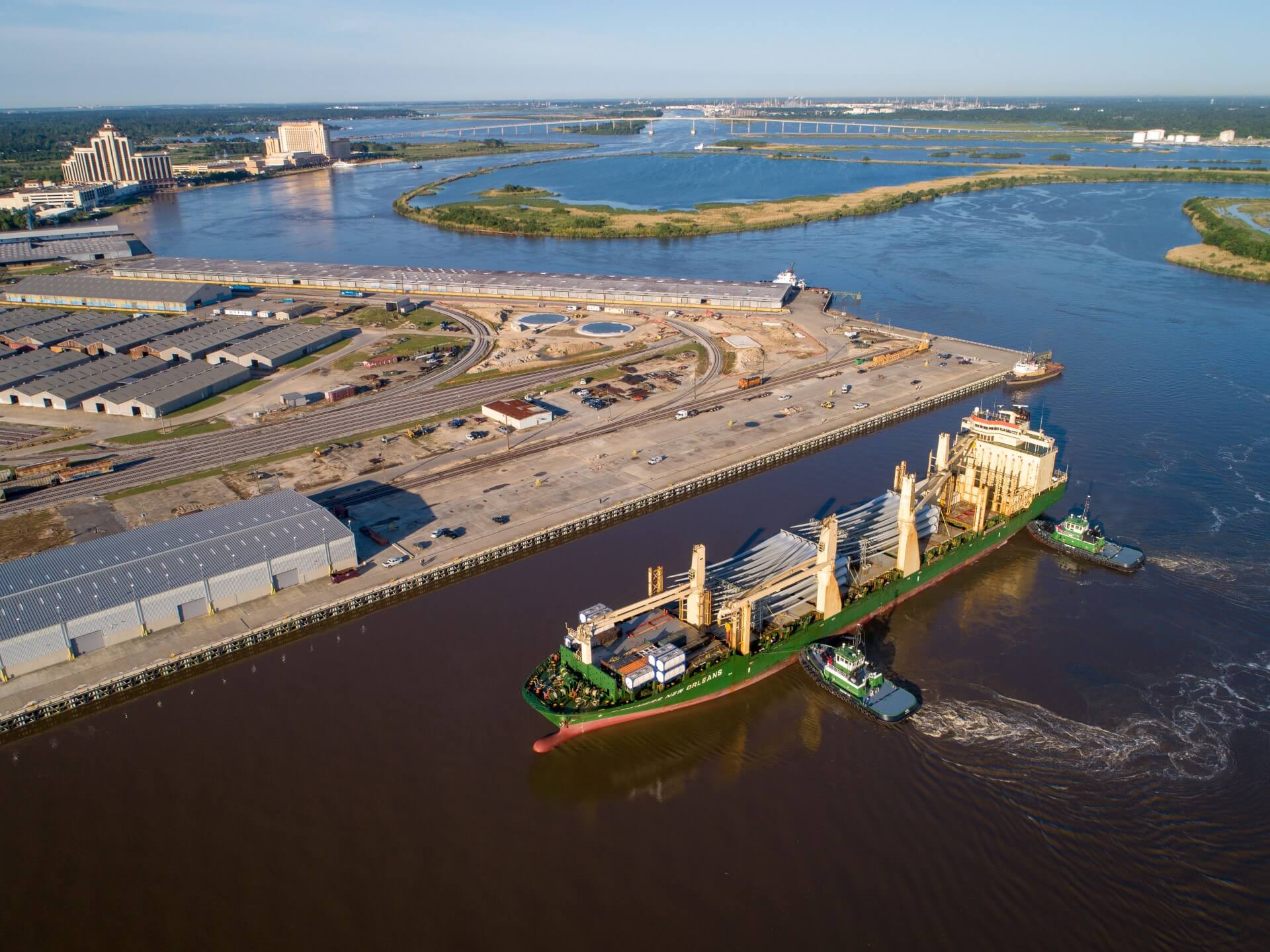
Ports play a critical role in the global supply chain, but not all ports offer the same level of connectivity. One of the most important advantages a port can provide is access to multiple rail carriers. Dual rail service strengthens logistics flexibility, improves efficiency, and creates a more competitive environment for shippers moving cargo to and from port facilities.
At the Port of Lake Charles, access to both Union Pacific Railroad and Kansas City Southern Railway provides a significant operational advantage for industries relying on rail-to-port cargo movement.
Increased Routing Flexibility
Dual rail service allows shippers to move cargo across multiple routes rather than relying on a single network. This flexibility is especially important for bulk commodities, chemicals, and industrial materials that require consistent and predictable transportation.
With two major rail carriers serving the port, cargo can be routed more efficiently based on destination, transit time, and network availability. This reduces the risk of delays and provides alternative options when disruptions occur elsewhere in the rail system.
Competitive Pricing and Service Options
Access to more than one Class I railroad introduces competition, which can lead to more competitive pricing and service offerings. Shippers benefit from the ability to evaluate multiple transportation options rather than being limited to a single provider.
This competitive dynamic supports cost control, particularly for high-volume cargo such as grain, petroleum products, and dry bulk materials. Over time, even small cost differences per ton can significantly impact overall logistics expenses.
Expanded Market Reach
Each railroad network serves different regions and industrial corridors. By connecting to both Union Pacific and Kansas City Southern, the Port of Lake Charles gains access to an extensive network that reaches key markets across the Midwest, Gulf Coast, and beyond.
This expanded reach allows cargo to move efficiently between inland production areas and international shipping routes. It also supports import distribution, enabling materials arriving by vessel to be transported inland through multiple rail corridors.
Improved Supply Chain Reliability
Reliability is a critical factor in logistics planning. Dual rail service enhances supply chain resilience by providing redundancy. If one rail network experiences congestion, maintenance issues, or service interruptions, cargo can often be rerouted through the second carrier.
This level of redundancy is particularly valuable for industries that depend on consistent throughput, including energy, agriculture, and manufacturing sectors.
Supporting Efficient Rail-to-Port Cargo Movement
Rail plays a central role in moving large volumes of cargo to port facilities for export. At the Port of Lake Charles, dual rail service works in coordination with short line operations to ensure cargo moves efficiently from inland origins to vessel loading points.
This integration supports streamlined rail-to-port cargo handling, reduces bottlenecks, and improves overall turnaround times for shipments moving through the port.
A Strategic Advantage for Gulf Coast Logistics
As global supply chains continue to evolve, ports with strong rail connectivity are better positioned to support long-term growth. Dual rail service provides the flexibility, reach, and reliability that modern logistics operations require.
For shippers evaluating Gulf Coast ports, access to multiple rail carriers is not just a convenience. It is a strategic advantage that can influence cost, efficiency, and overall supply chain performance.