Port Warehousing Takes on a Strategic Role
Port warehousing in Louisiana has evolved beyond simple storage. As tariffs, trade policy shifts, and global market volatility continue to influence shipping decisions, warehousing located within or adjacent to Foreign Trade Zones has become a strategic tool for international shippers. Foreign Trade Zone 87, which includes the Port of Lake Charles, is playing an increasingly important role in how cargo is staged, managed, and moved through the Gulf Coast.
For shippers moving bulk, breakbulk, and industrial cargo, the ability to store goods while maintaining financial and operational flexibility is now a critical part of supply chain planning.
Understanding the Value of Foreign Trade Zone 87
Foreign Trade Zone 87 allows imported cargo to enter designated areas without immediate payment of U.S. customs duties. Duties are assessed only when goods leave the zone and enter domestic commerce. Cargo that is re-exported can avoid duties altogether.
This structure gives shippers more control over timing and cost. In Louisiana, where ports support international trade routes serving Latin America, Europe, and beyond, this flexibility is especially valuable. FTZ 87 supports a wide range of activities, including storage, staging, and limited processing, making it well suited for high volume commodity flows.
Warehousing Flexibility During Tariff Uncertainty
Tariff changes often introduce uncertainty into global trade. Shippers may delay distribution decisions while evaluating landed costs or negotiating contracts. Port warehousing within FTZ 87 provides a solution by allowing cargo to pause without triggering immediate duty obligations.
For Louisiana ports, this means warehouses are no longer passive facilities. They function as buffers that help maintain cargo flow even when market conditions shift. Goods can remain staged near the dock, preserving access to rail and vessel connections while giving shippers time to respond to changing conditions.
Supporting Re Export and Processing Activities
Many cargoes moving through Louisiana ports are destined for international markets rather than U.S. consumption. FTZ 87 enables these goods to be re-exported directly from port warehousing without incurring U.S. duties.
In addition, FTZ enabled facilities can support light processing or consolidation activities. This allows shippers to adjust cargo configurations or redirect shipments as demand changes across regions. For industries such as energy, agriculture, and manufacturing, this adaptability reduces risk and improves supply chain resilience.
Integrating Warehousing With Port Infrastructure
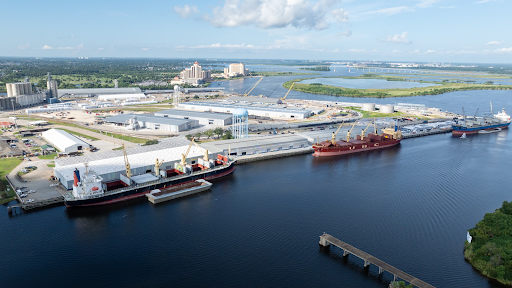
The value of FTZ 87 is amplified when warehousing is integrated with deepwater access, rail connectivity, and on-dock cargo handling. This alignment allows cargo to move efficiently between vessel, warehouse, and inland transportation without unnecessary handling or delay.
At the Port of Lake Charles, FTZ 87 operates as part of a broader logistics ecosystem designed to support global trade. By combining port warehousing with FTZ benefits, Louisiana continues to strengthen its position as a reliable and flexible gateway for international shippers.
A Competitive Advantage for Global Trade
As trade conditions remain unpredictable, FTZ 87 has become a practical tool for managing cost, timing, and risk. Port warehousing supported by Foreign Trade Zone 87 gives shippers the flexibility they need to operate confidently in an evolving global market while keeping cargo moving through Louisiana’s ports efficiently and reliably.