International trade is often discussed in terms of finished products moving from one country to another. But global commerce also depends on the movement of raw materials, industrial equipment, construction products, energy-related commodities and project cargo.
That is where ports like the Port of Lake Charles play an important role.
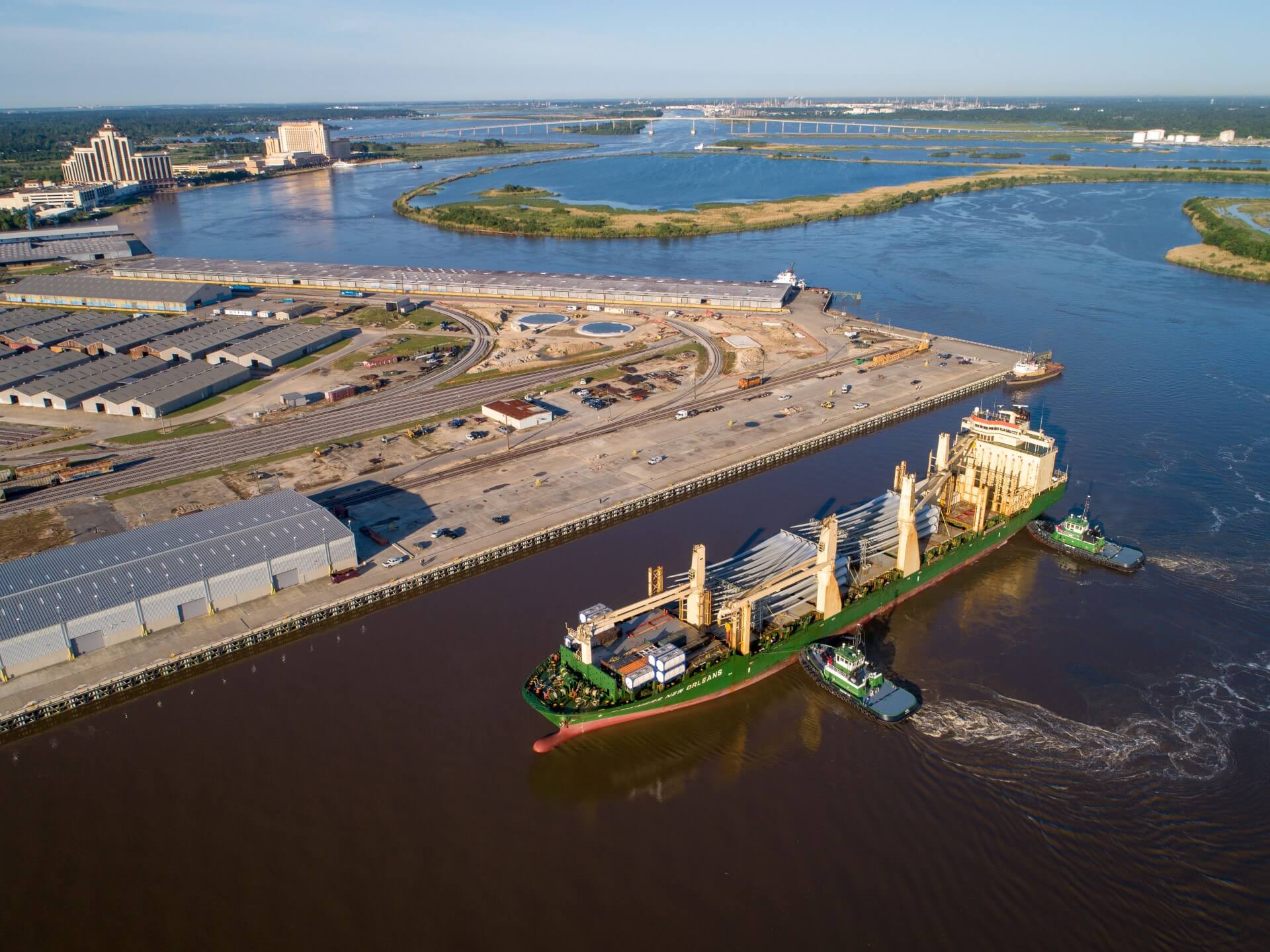
Located in Southwest Louisiana with access to the Gulf through the Calcasieu Ship Channel, the Port of Lake Charles connects regional industry to international markets. Its role in global trade is not limited to one type of product or one shipping method. Instead, the Port supports cargo that moves between domestic industries and overseas suppliers, manufacturers and customers.
Bringing Materials In, Shipping Products Out
International trade depends on strong connections between production areas, transportation networks and global shipping routes. The Port of Lake Charles sits in a region closely tied to energy, petrochemical, construction, agriculture and industrial activity. That regional economy helps shape the cargo moving through the Port.
Imports may include materials needed by manufacturers, builders, energy facilities or industrial operators. Exports may include commodities, raw materials or products headed to international buyers. In both directions, the Port helps connect Southwest Louisiana to the global marketplace.
Cargo may arrive from overseas and continue by truck, rail or barge to inland destinations. Other shipments may originate across the region before being loaded for export. In each case, the Port serves as a working link between local industry and international trade.
International Shipping Beyond Containers
While container shipping is a major part of global trade, not every product can move in a container. Many industrial goods are too large, too heavy, too irregular or too specialized for standard containerized shipping.
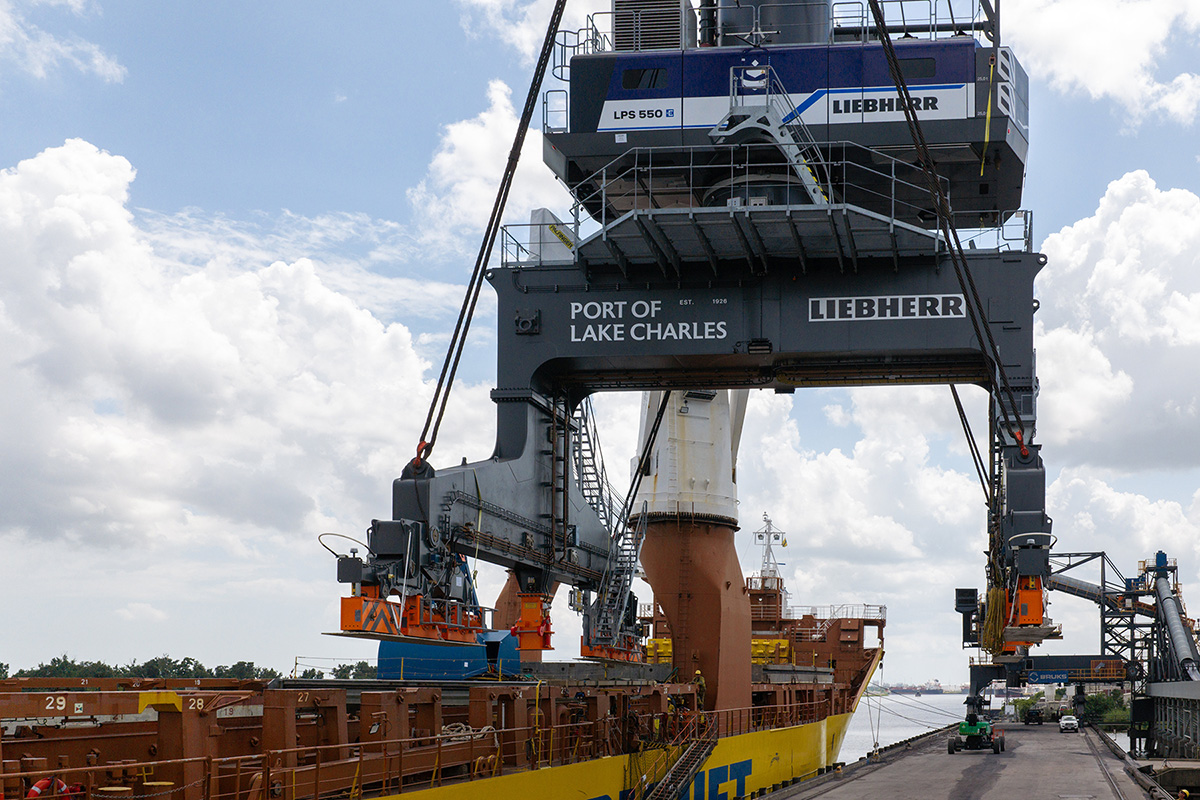
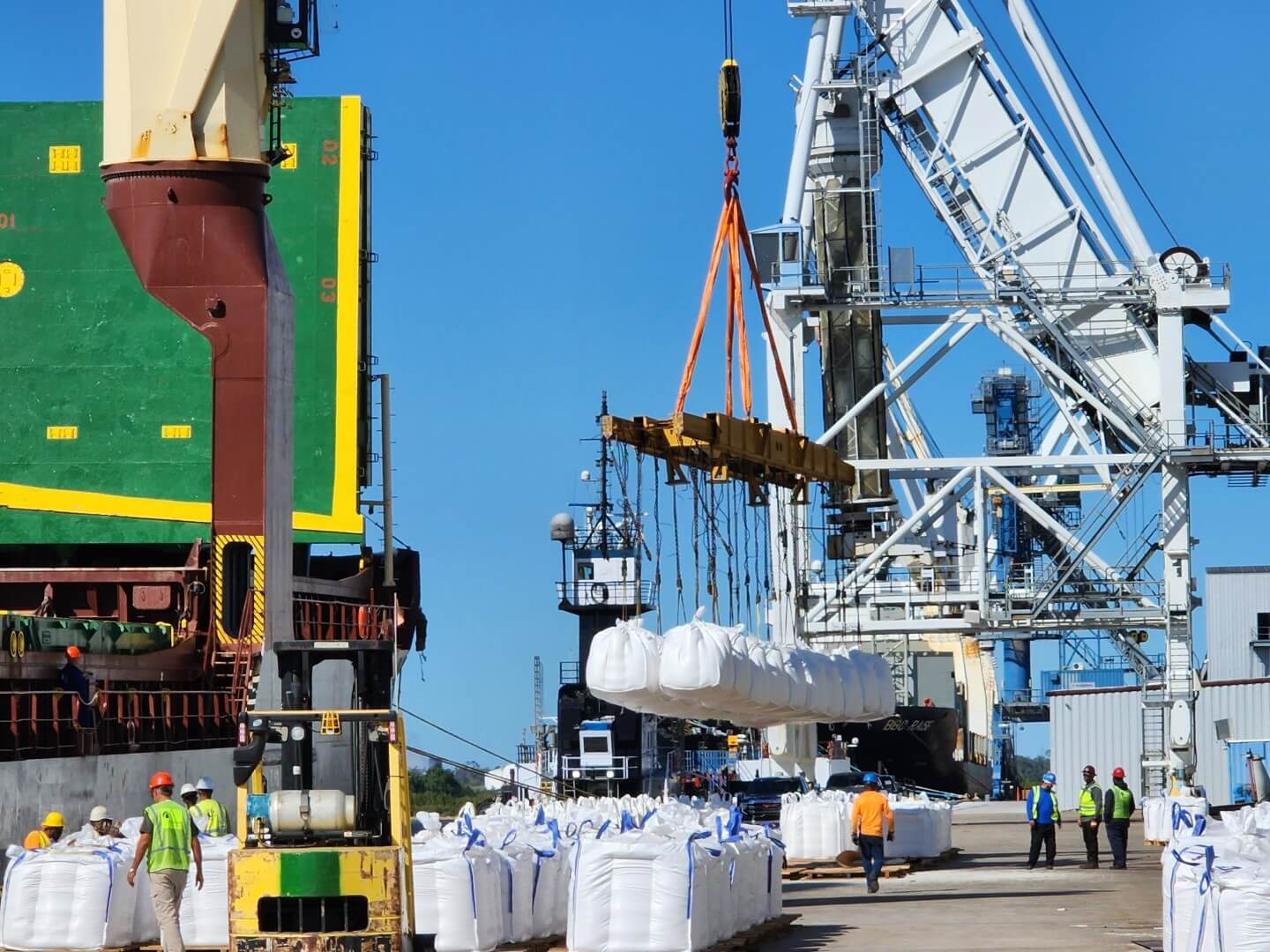
At the Port of Lake Charles, international cargo may include forest products, lumber, steel, aluminum, bulk grain, agricultural products, dry bulk materials, industrial equipment, machinery, heavy-lift cargo, project cargo and specialty cargo.
These cargo types help explain the Port’s role in international shipping. This is not only about moving goods from one country to another. It is about moving the materials, equipment and commodities that industries rely on to build, produce, expand and operate.
What International Trade Requires
Moving cargo across borders involves more than placing goods on a vessel. International shipping requires coordination across several steps, including:
- Vessel scheduling and marine access
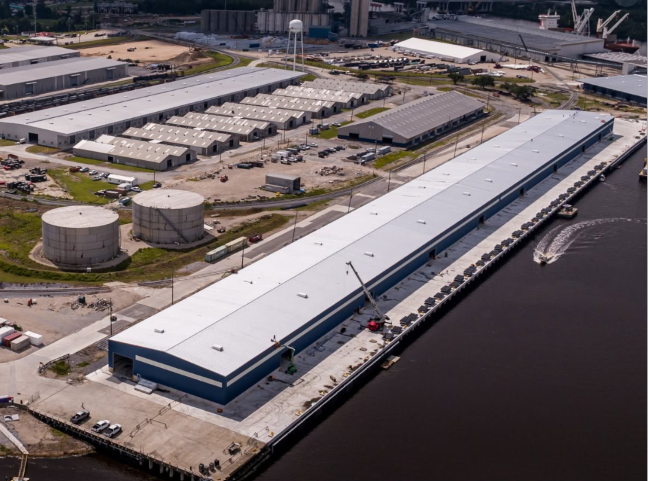
- Cargo handling and storage
- Customs and documentation
- Truck, rail or barge connections
- Timing between suppliers, buyers and end users
- Specialized equipment for oversized or unusual freight
- Reliable communication between port partners, carriers and cargo owners
For industrial cargo, these details are especially important. Delays, equipment limitations or poor coordination can affect larger projects, production timelines or supply chain reliability.
Foreign-Trade Zone Advantages
Through Foreign-Trade Zone No. 87, the Port of Lake Charles also offers a tool for companies involved in international shipping. Foreign-Trade Zones can help businesses manage imported goods, customs procedures, inventory timing and distribution more efficiently.
For companies involved in global sourcing, manufacturing or distribution, this can support better planning and added supply chain flexibility.
The Bigger Picture for International Shipping
The Port of Lake Charles’ international shipping role is best understood through the industries it supports. Its cargo mix reflects the real movement of global trade: materials, machinery, commodities and equipment moving between local industry and international markets.
For Southwest Louisiana, the Port provides access to the world. For global trade partners, it provides a working gateway into one of the Gulf Coast’s important industrial regions.